
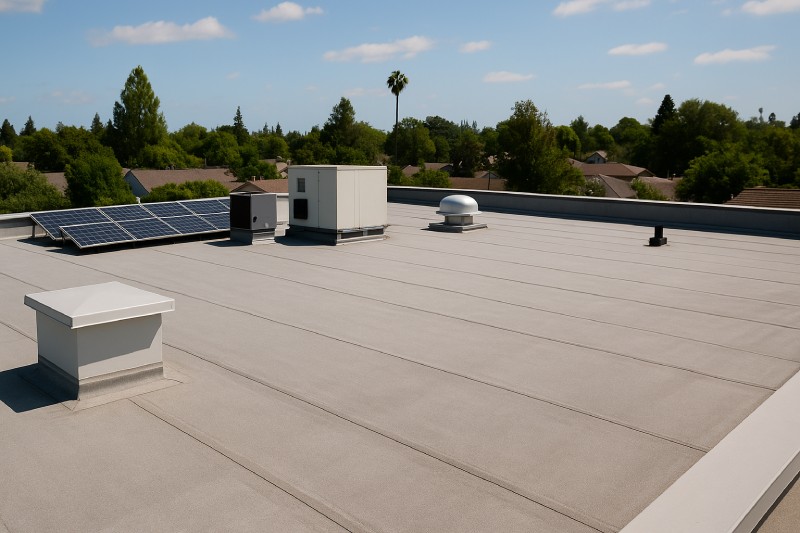
A Fresno homeowner once called us in a panic after a monsoon-style summer storm left a puddle inside her living room.
Her old roof wasn’t failing everywhere – just one section had sagged enough to trap water. The damage was preventable, but her home’s roof design and lack of drainage worked against her.
That’s the hidden problem with roofs in the Central Valley. They don’t just protect you from heat and rain – they have to work with Fresno’s dry summers, sudden downpours, and building codes. If they don’t, water intrusion, high cooling bills, and constant repairs follow.
Flat roof installation, done right, solves these problems. It can handle Fresno’s climate, meet Title 24 cool roof rules, and even give your home or commercial property a sleek, modern architectural profile.
The key is getting the right roofing materials, proper slope, and a drainage system that works in real-world weather.
Why Flat Roofs Make Sense in Fresno
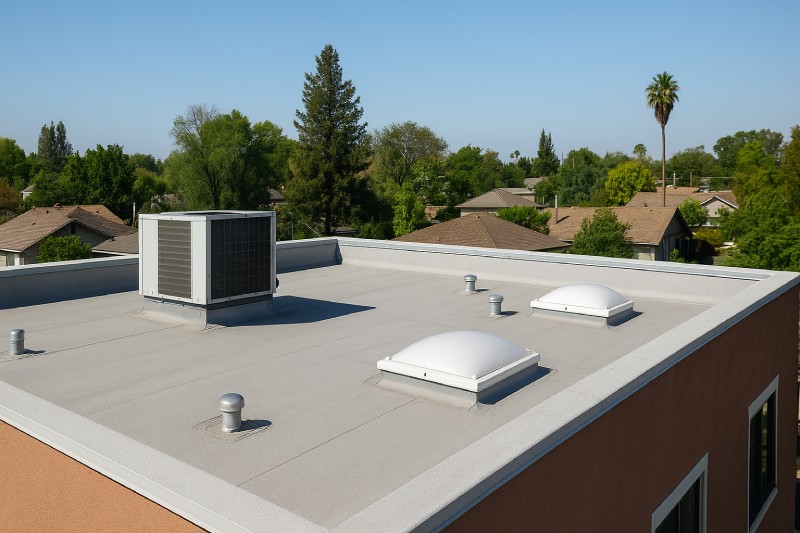
Flat roofs aren’t perfectly flat – they have a slight slope to allow water drainage. In Fresno, low annual rainfall makes them a cost-effective choice, especially when paired with reflective surfaces to keep homes cooler.
Benefits include:
- Easier installation and access for repairs or inspections.
- Flexible design for rooftop equipment or solar panels.
- Potential for lower upfront material costs compared to pitched roofs.
When matched with the right waterproofing membrane – like TPO flat roofing or EPDM rubber roofing – these systems handle heat without the premature cracking or blistering common in outdated asphalt systems.
What “Flat” Really Means in Roofing Terms
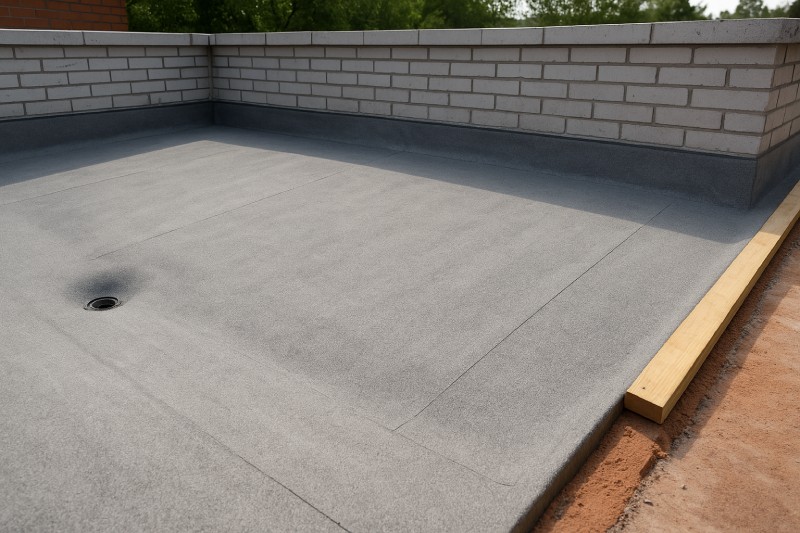
In the construction industry, “flat” usually means a slope between 1/4 and 1/2 inch per foot. This is critical for proper water drainage.
Fresno building codes require adequate slope and overflow drainage to prevent ponding water, which can lead to seam separation and structural load issues.
For homeowners, this means your roofing contractor must plan your perimeter framework, tapered insulation layout, and drain placement from the start.
A mortar-filled perimeter framework or timber fillets may be used to create the needed slope transition without affecting the overall look of your roof.
The Cost Factors You Should Know
Flat roof installation costs in Fresno vary based on size, materials, and complexity. Tear-offs are more expensive than recover installations, especially if your existing roof has two or more layers or is water-damaged.
Key cost drivers:
- Roof size and complexity – Larger roofs need more materials and labor.
- Material choice – TPO, modified bitumen, EPDM rubber roofing, or built-up roof (BUR) systems each have different price points.
- Drainage system – Adding or upgrading drains, scuppers, and gutter systems adds cost but prevents future water damage.
- Insulation materials – Higher R-values improve energy efficiency but cost more upfront.
- Permits and disposal – Fresno’s permit fees and debris hauling can add a few hundred dollars to the project.
Average Installed Costs by Material in Fresno
| Roofing Material | Cost per sq. ft. (Installed) | Typical Lifespan |
| TPO Flat Roofing | $6 -$10 | 20 – 30 years |
| Modified Bitumen | $5 – $9 | 15 – 20 years |
| EPDM Rubber Roofing | $5 – $8 | 20 – 25 years |
| Built-Up Roof (BUR) | $4 – $8 | 15 – 20 years |
| Fiberglass GRP | $8 – $12 | 25+ years |
Meeting Fresno’s Title 24 Cool Roof Rules
California’s Title 24 energy standards require low-slope roofs in Fresno’s Climate Zone 13 to meet specific solar reflectance and thermal emittance ratings.
This means your roofing materials must be Cool Roof Rating Council (CRRC) approved.
You can check the official CRRC directory to ensure the product your contractor proposes meets compliance.
Choosing a cool roof doesn’t just pass inspection – it reduces summer cooling costs significantly over time.
The Flat Roof Installation Process
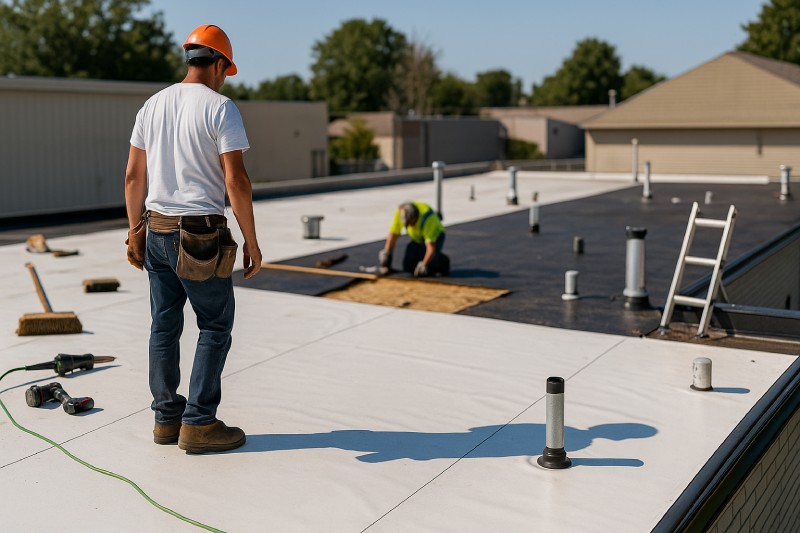
A professional installation is not just laying down a membrane. It’s a multi-stage process that protects your investment:
- Inspection & Planning – Roof measurements, core cuts, and moisture scans to determine if a tear-off is required.
- Permitting – Required by Fresno building codes, especially for full replacements.
- Tear-Off or Surface Prep – Removing old roofing materials or preparing for a recovery.
- Deck Repairs – Replacing damaged sheathing or adjusting slopes.
- Insulation & Cover Board – Improves R-value and protects against punctures.
- Membrane Installation – TPO, EPDM, modified bitumen, or other chosen system applied with proper seams and fastening.
- Drainage System Setup – Installing roof drains, scuppers, and gutter systems for effective water removal.
- Flashing & Edge Metal – Sealing penetrations and roof edges.
- Final Inspection & Warranty Registration – Ensuring code compliance and product warranty activation.
Choosing the Right Roofing Material
The right choice depends on budget, design goals, and usage:
- TPO Flat Roofing – Popular for its white reflective surface and energy savings.
- EPDM Rubber Roofing – Flexible, durable, and good for temperature swings.
- Modified Bitumen – Strong seams and multi-layer protection.
- Built-Up Roof (BUR) – Multiple asphalt and felt layers for heavy-duty protection.
- Fiberglass GRP / Glass-Reinforced Polyester – Excellent for complex roof shapes and chemical resistance.
Each has its own installation considerations and maintenance routines.
Drainage: Your Roof’s Lifeline
Even in Fresno’s dry climate, a sudden storm can drop heavy rainfall in minutes. Without a proper drainage system, water pooling can lead to leaks, mold, or premature roof failure.
A well-designed drainage plan includes:
- Primary drains at the lowest roof points.
- Secondary drains or scuppers as overflow protection.
- Sloped insulation or tapered systems to guide water to outlets.
Insulation and Energy Performance
Insulation materials like polyiso boards or spray foam not only regulate indoor temperature but also protect the waterproofing membrane from extreme heat. Fresno homes benefit from higher R-value insulation to reduce cooling loads during summer.
Cover boards add impact resistance, especially important if you have rooftop equipment or expect regular maintenance traffic.
Permits and Inspection Requirements
Fresno’s building department requires permits for most flat roof installations. Inspections will check slope, material compliance, drainage, and CRRC product labels. Working with a licensed roofing contractor ensures these steps are handled without delays.
Maintenance After Installation
Even the best flat roofs need routine checks. Schedule seasonal inspections to:
- Clear debris from drains and gutter systems.
- Check for seam separation or punctures.
- Verify flashing integrity around penetrations.
Simple maintenance routines can add years to your roof’s life.
FAQs About Flat Roof Installation in Fresno
How long does a flat roof installation take in Fresno?
Most residential projects take 3 to 5 days, depending on size, tear-off requirements, and weather conditions.
What is the best flat roof material for Fresno’s climate?
TPO and EPDM rubber roofing perform well in Fresno due to their heat resistance and durability.
Do I need a permit for flat roof installation in Fresno?
Yes, most projects require a permit, and inspections will check compliance with local building codes.
How often should I inspect my flat roof?
At least twice a year, and after major storms, to catch small issues before they become expensive repairs.
Ready for a Roof That Works With Fresno’s Climate?
Fresno Roof Repair specializes in code-compliant flat roof installation with high-quality materials, expert drainage planning, and craftsmanship backed by a licensed, bonded, and insured team.
Whether you need a full replacement or a new roof installation in Fresno, we make sure your roof performs from day one – and keeps protecting your home for decades.
Call us today for a free, no-obligation quote on your flat roof installation in Fresno.

Alexander Johnson is an experienced roofing professional with more than 25 years in the industry and serves as CEO of Fresno Roof Repair. His expertise combines traditional craftsmanship with modern technology, with a focus on durable roofing solutions designed for Fresno’s diverse climate.