
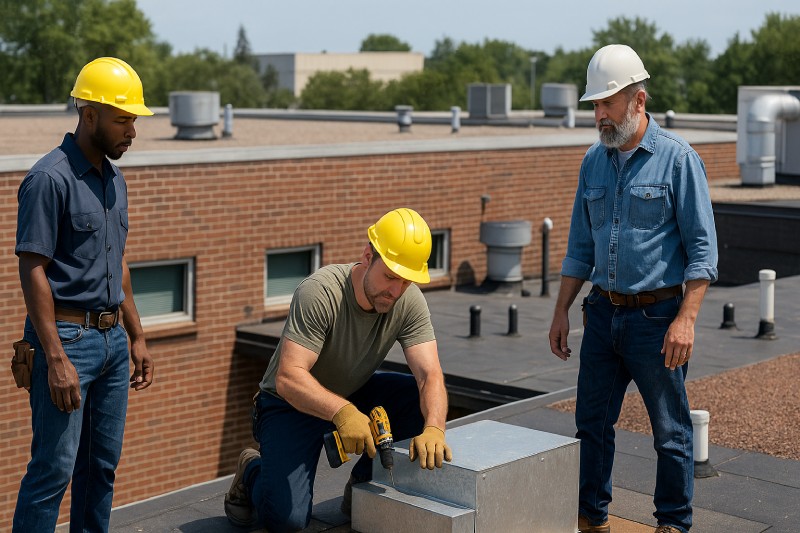
A sudden leak in your business roof can bring operations to a halt in minutes.
One Fresno laundromat owner found water pooling over the drying machines right after a rainstorm.
Contractors didn’t respond, or asked for full payment upfront. The result? A soggy ceiling, ruined equipment, and surprise out- of- pocket costs.
You need a commercial roofing contractor who gets Fresno, its climate, building codes, permit timelines, and roofing realities. Read on to learn the seven essentials that will help you hire smart, fix once, and protect what matters most.
1. Local Knowledge Means Faster Fixes
Your contractor should be Fresno‑based and well versed in local conditions. That matters because:
- Weather patterns: High heat, dry summers, some heavy rain—roofing materials like TPO and waterproofing layers perform differently here.
- Permitting: Fresno city and county rules can delay work if the roofer isn’t familiar with local processes.
- Response time: Local contractors arrive faster after rain, wind, or hail damage, less downtime for your business.
Pro tip: Ask to visit a recent project in Fresno, seeing work first‑hand beats any brochure.
2. Proof of License, Insurance & Worker Safety
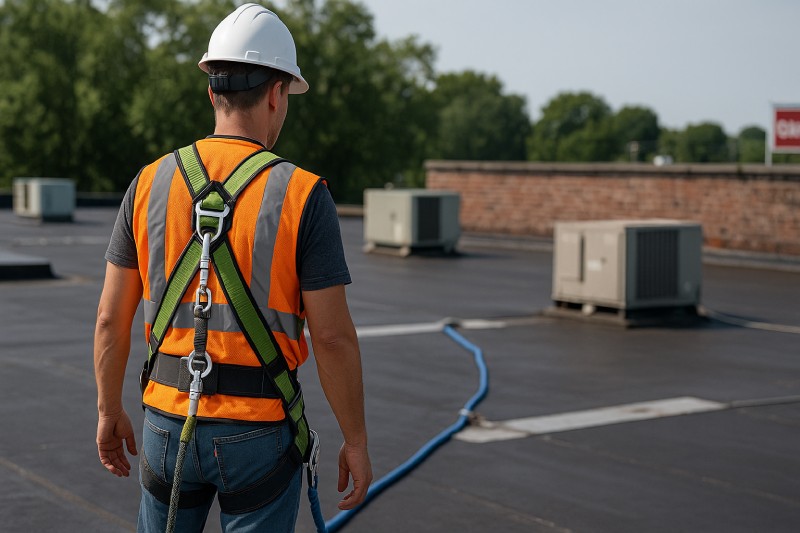
Contractors lacking proper credentials are a huge risk. Look for:
- A C‑39 Roofing Contractor license for projects over $500.
- Insurance that includes general liability, workers’ comp, and a surety bond.
- On‑site safety measures: fall protection, roof harnesses, OSHA compliance.
Also check for affiliations like NRCA and certifications from manufacturers such as GAF. When a roofer shows credentials and insurance, you get more than a roof, you get real protection.
3. Experience with Commercial Roof Types
Flat commercial rooftops come in various styles, TPO, EPDM, built‑up asphalt, metal, liquid‑applied systems. Residential roofers often haven’t done these before.
Make sure your contractor:
- Demonstrates project experience for your roof type, ask for photos and client contacts.
- Knows how to size cover boards, insulation (like Polyiso), and flashing for HVAC units or skylights.
- Can guide you through choosing roofing products that resist ponding water and UV damage common here.
A contractor with a solid roof system toolkit is less likely to miss issues that cost extra later.
4. Warranty Terms and Ongoing Maintenance Support
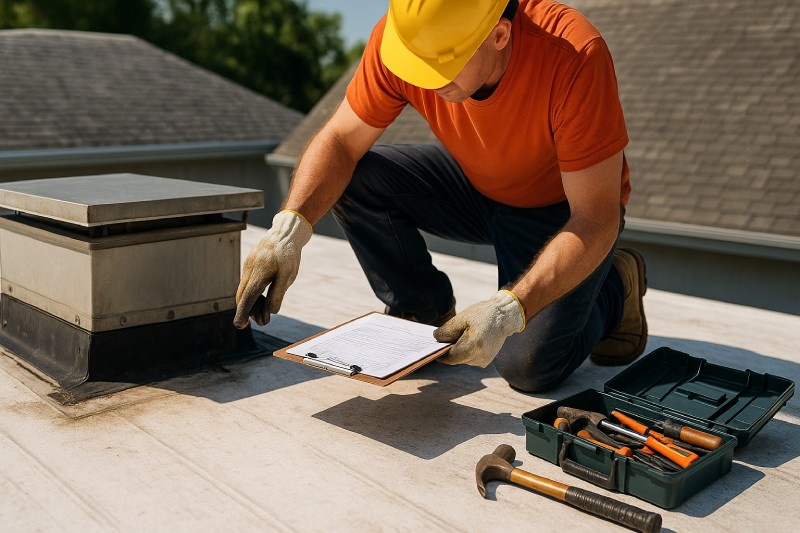
Warranties come in two flavors:
- Manufacturer warranty covers roofing products like TPO or insulation.
- Workmanship warranty covers the contractor’s installation.
Ask about:
- Warranty length, 5 year workmanship? 20 years of material?
- What invalidates coverage, lack of maintenance? Unauthorized work?
- Maintenance plans, a contractor that offers annual inspections catches issues early.
A clear maintenance schedule after installation can add years to your roof’s life, and keep warranties valid.
5. Clear Pricing, No Surprises
Commercial roofing estimates often hide fees. Want clarity? Get a line‑item proposal that includes:
| Estimate Item | Description |
| Roofing materials | TPO, EPDM, liquid‑applied system, insulation |
| Labor | Crew size, estimated man‑hours |
| Cover boards & waterproofing | Roof deck protection, weatherproof layers |
| Disposal | Dumpster rental, debris hauling costs |
| Extras & allowances | Permit fees, flashings, rooftop details |
Compare bids closely. Big gaps might mean subpar materials or unsaid expenses.
6. Proven Reputation in the Commercial Sector.
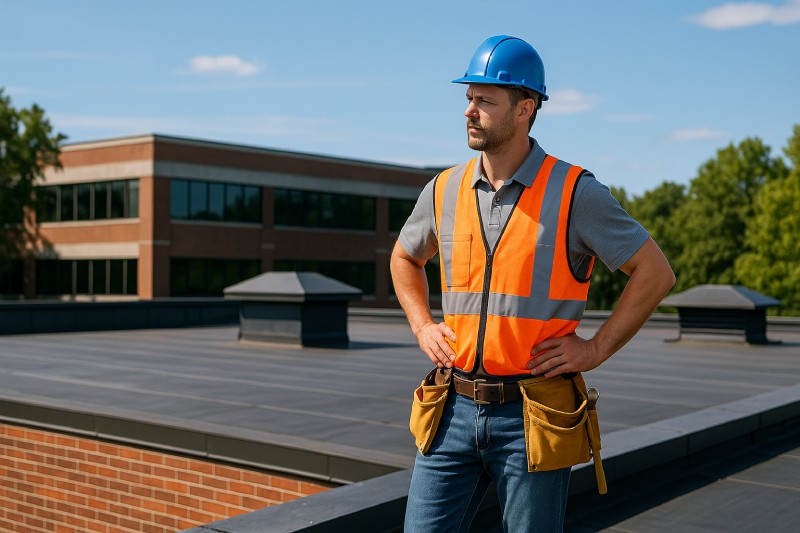
Commercial roofing is not a learning-on-the-job situation. A contractor’s reputation, especially for commercial work,should be visible through past projects, not just polished websites or paid ads.
Start by asking for commercial references. Residential experience doesn’t cut it when you’re dealing with large square footage, flat roof drainage, or material like a liquid-applied roofing system.
Ask to speak to building managers or facility directors who’ve had recent work done. Was the job completed on time? Did it stay within budget? Did they return for follow-up support?
Next, check review platforms and trade organizations. Don’t stop at Yelp. Look into the Better Business Bureau, contractor license databases, or directories like the National Roofing Contractors Association.
If they list commercial roofing in their offerings but you can’t find any projects over 1,500 square feet, that’s a red flag.
Visit projects in-person if possible. Look for signs of wear, clean seams, properly secured HVAC flashing, and ponding areas.
A well-executed job that’s held up for 2–3 years speaks louder than any pitch deck.
And don’t overlook whether the contractor works with premium commercial roofing materials, like multi-layer Asphalt Roofing Systems or Polyiso insulation, and how long they’ve offered those solutions.
7. Emergency Readiness and Insurance Support
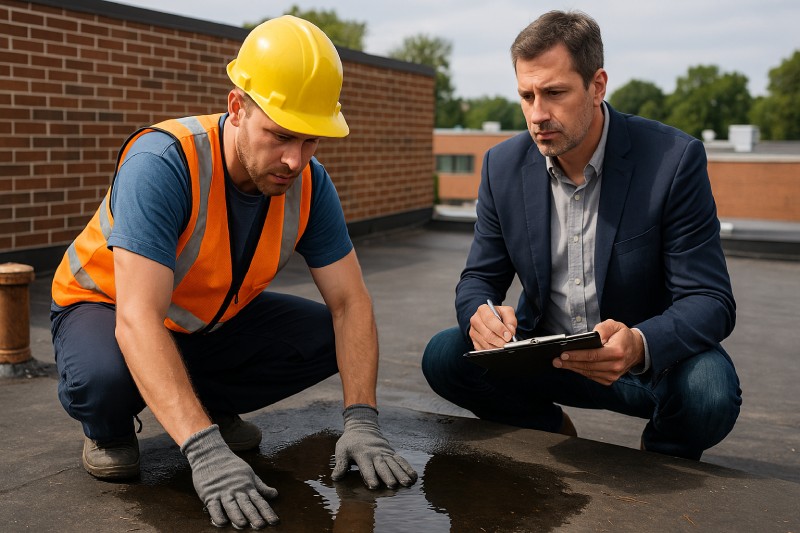
When a roof leak hits, waiting two days for a callback isn’t an option.
That’s why one of the most overlooked but critical qualities in a commercial roofing contractor is their emergency response protocol.
Ask how they handle storm calls.
Do they have a 24/7 hotline?
Are crews staged and ready for deployment during the rainy season? If not, you might find yourself on a waiting list while water keeps seeping in.
A qualified commercial roofing contractor will offer:
● Temporary patches to stop the damage immediately
● Moisture tracking and infrared scanning if needed
● Full assessments with photos and written documentation for insurance
This last part is crucial. Most business owners don’t have time to decipher their insurance policy after an emergency.
A good roofer will help you understand your coverage, prepare the right paperwork, and make sure nothing gets missed in the claim.
Also ask how quickly they can schedule full replacements if needed. Some contractors only offer repairs.
Others will prioritize existing maintenance clients for faster full rebuilds. If your building houses expensive equipment or perishable goods, this could save thousands.
Bonus: Energy and Sustainability Options
If your building’s roof hasn’t been updated in a decade or more, it’s probably costing you more in cooling than it should.
Modern roofing systems are no longer just about leak protection, they’re about performance, savings, and environmental impact.
Reflective coatings and white membranes can significantly reduce heat absorption. This lowers indoor temperatures and eases the load on HVAC units, leading to lower monthly bills. In Fresno’s summer heat, those savings can add up quickly.
Solar readiness is another consideration. If you’re considering solar energy, your roofer should help you evaluate whether your current roof can support it, or whether structural upgrades and proper flashing are needed.
Green roofing options, from eco-friendly adhesives to systems made with recycled materials, are increasingly part of the Commercial Roofing Catalog. Some products also qualify for local rebates or utility-based energy incentive programs, especially those that contribute to better Energy Efficiency.
Here’s a quick comparison table of popular sustainable roofing features:
| Feature | Benefit | Best For |
| White reflective membranes | Reduces heat absorption | Retail, schools, warehouses |
| Polyiso insulation upgrades | Improves thermal resistance (R-value) | Office buildings, data centers |
| Solar-ready flashing | Prepares for panel installation | Industrial buildings, hotels |
| Liquid-applied systems | Seamless waterproofing, less waste | Hospitals, complex roof designs |
FAQs About Commercial Roofing Contractor
What should a commercial roofing contractor in Fresno be licensed for?
They need a C‑39 license to work on jobs over $500. That license ensures they’re vetted by the California CSLB.
How often should I inspect my commercial roofing contractor warranty?
Roof systems benefit from annual inspections, especially after winter rain. Maintenance keeps warranties active and problems small.
Do commercial roofing contractors in Fresno help with the insurance policy process?
Many do. The right contractor can document damage, suggest repairs, and guide paperwork so your claim gets approved faster.
Final Words
Hiring a commercial roofing contractor in Fresno isn’t just picking the lowest bid.
You need someone who knows local conditions, holds proper licensing and insurance, has deep experience with commercial materials, and will back their work with clear warranties and maintenance plans.
Add fast emergency service and sustainability options, and you’ll turn a roof project into a long-lasting asset.
If you’re ready to protect your property with skilled, licensed professionals, check out Fresno Roof Repair’s services in commercial roofing contracotrs.
Reliable commercial roofing starts with the right contractor on your rooftop.

Alexander Johnson is an experienced roofing professional with more than 25 years in the industry and serves as CEO of Fresno Roof Repair. His expertise combines traditional craftsmanship with modern technology, with a focus on durable roofing solutions designed for Fresno’s diverse climate.