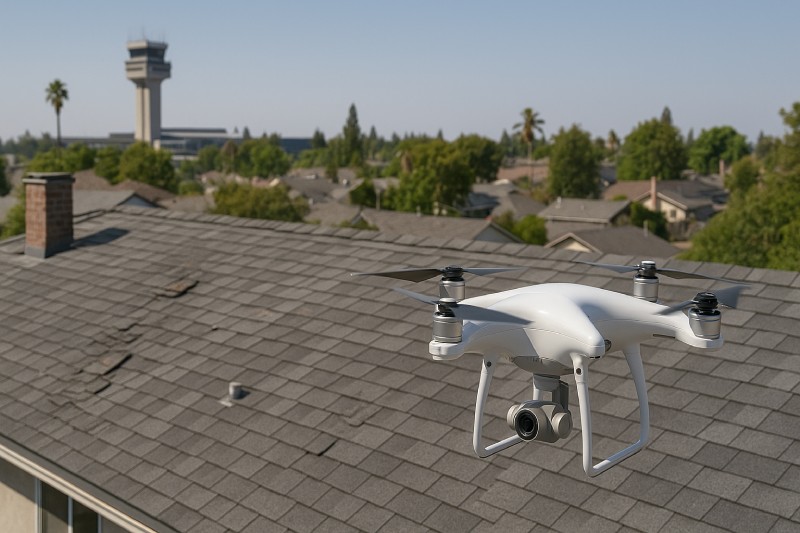
Climbing up a two-story roof in Fresno’s summer heat is no small risk. Between unstable ladders, loose shingles, and slippery dust, homeowners and inspectors alike have seen accidents that could have been prevented.
Roof inspections are essential for catching leaks, cracks, and storm damage, but the old way of doing things often puts safety on the line.
Now, drone roof inspections are changing the game. By sending an FAA-certified drone operator into the air with high-resolution cameras and mapping tools, inspections can be completed quickly and without danger.
The process isn’t just safer. It’s also more precise, giving homeowners a full digital record of their roof’s condition.
For Fresno families, that means fewer risks, faster service, and stronger documentation when working with an insurance company or preparing to sell a home. The shift is clear: ladders are fading, and aerial inspections are becoming the smarter choice.
How Drone Roof Inspections Work
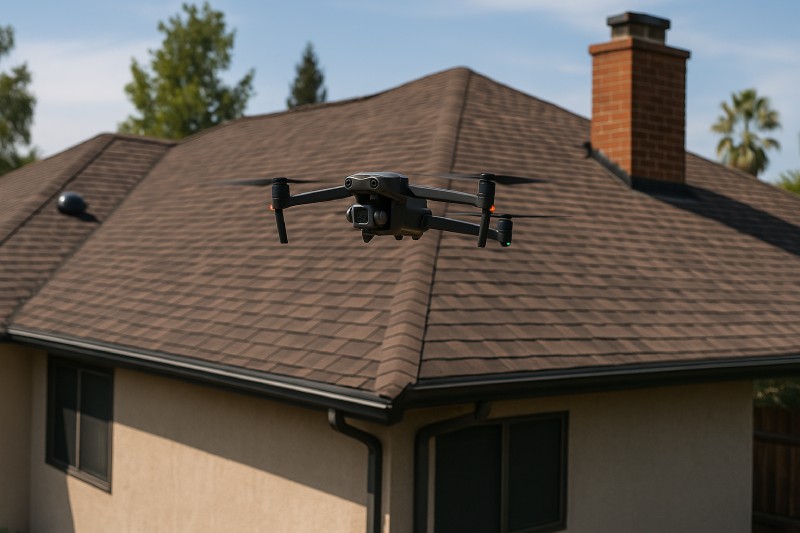
A drone roof inspection is not just about flying a gadget over your house. It follows a structured inspection workflow designed to capture clear data and deliver actionable results.
- Flight Planning – Before launch, the operator maps out a flight plan. This ensures full coverage of all roof facets, chimneys, gutters, and valleys. Planning also accounts for roof height, nearby trees, and weather conditions like wind.
- Flight and Data Capture – During the flight, drones equipped with high-resolution cameras, thermal sensors, and mapping software scan the entire roof. Models like the DJI Mavic 3E, DJI Matrice 350 RTK, and EVO II 640T capture 2D maps, thermal imagery, and even LiDAR data when needed.
- Processing and Analysis – The aerial data is processed with damage detection software and mapping tools. Thermal data highlights anomalies such as heat loss, water damage, or hidden leaks. Orthomosaic maps create a web-friendly report and 3D model for property evaluations.
- Inspection Report Delivery – Homeowners receive an inspection report with drone photographs, digital roof reproduction, and a breakdown of damage areas. These inspection reports are ideal for insurance claims and real estate documentation.
By combining drone hardware with software platforms like DJI Pilot 2 or EagleView Assess™, Fresno Roof Repair delivers clarity and precision that a ladder inspection cannot match.
7 Key Benefits Fresno Homeowners Notice Right Away
1. Safety First – No Risky Climbs
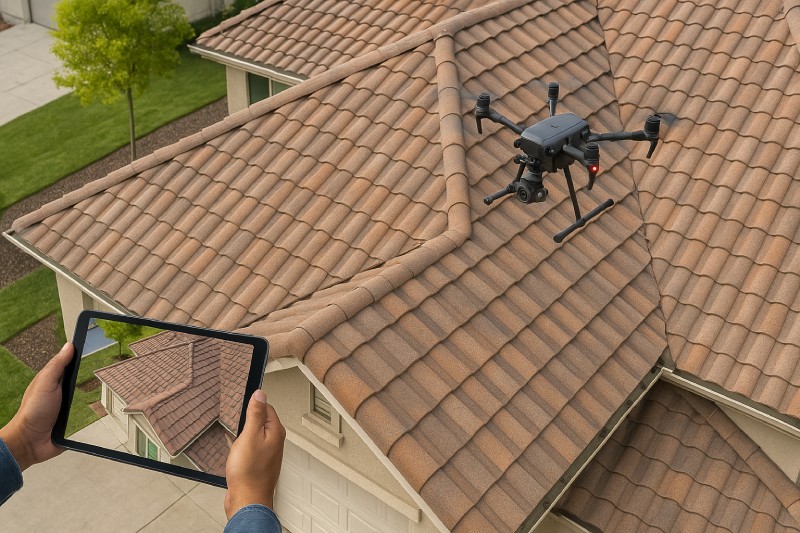
No more ladders, no more walking across steep tile roofs. Drones keep both the inspector and homeowner safe from falls.
2. Faster Turnaround Times
Traditional inspections can take hours. A drone can scan a roof and create a detailed aerial report in under 45 minutes.
3. High-Resolution Documentation
High-resolution cameras capture images sharp enough to detect cracked shingles, hail damage, and algae growth that’s invisible from the ground.
4. Thermal Imaging for Hidden Problems
Thermal sensors detect moisture beneath roofing materials or heat loss from attic spaces. This helps catch water damage before it spreads.
5. Hard-to-Reach Coverage
From valleys to flashing around chimneys, drones get full views of areas that are difficult or unsafe to walk.
6. Lower Costs in the Long Run
With fewer labor hours and no need for scaffolding, drone inspections often cost less than traditional methods.
7. Digital Records for Insurance and Resale
Having a digital inspection report and aerial photographs makes dealing with an insurance adjuster or potential buyer much smoother.
Fresno’s Roofing Challenges Made Easier With Drones
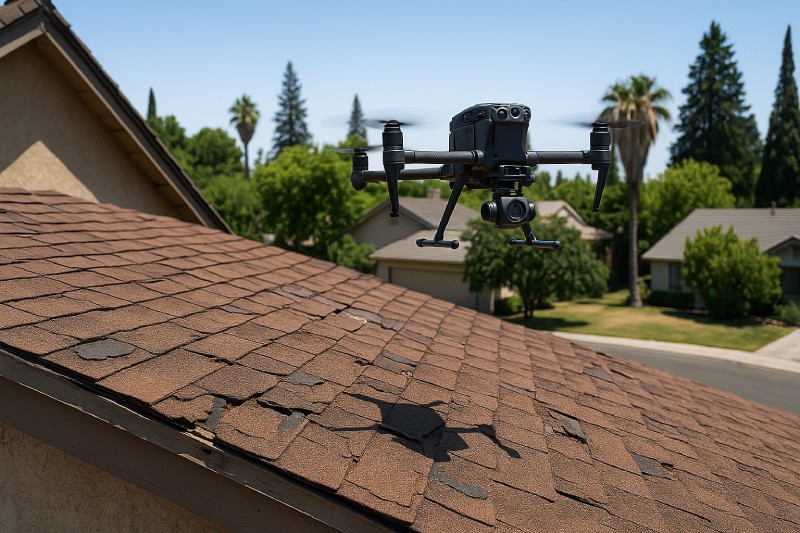
Fresno’s climate creates roof stress that many other regions never see. Summer days can push roof surfaces past 140°F. Those temperature swings cause shingles and tiles to expand and contract, often leading to cracking.
When sudden downpours hit, those cracks can quickly turn into leaks. Dry rot from trapped moisture is another silent culprit that eats away at wood decking. Add to that the layer of dust and pollen that builds up across the Valley, and you’ve got a recipe for roofing trouble.
Drone technology makes spotting these Fresno-specific issues much simpler. High-resolution cameras reveal missing or warped shingles, while thermal data can show early signs of water infiltration or insulation failure.
What once required risky guesswork now comes in the form of clear aerial inspections.
Legal and Safety Compliance You Can’t Skip
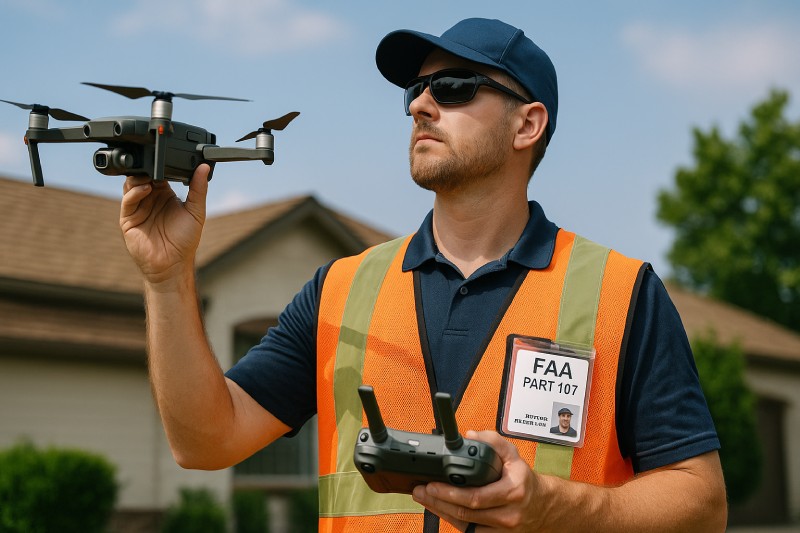
Not just anyone can fly a drone over your house. Professional inspectors need a Part 107 certificate from the FAA, which ensures they understand airspace rules and safe flight practices. In Fresno, this is especially important since flights may occur near Fresno Yosemite International Airport.
California’s privacy laws also apply. Drone operators must avoid capturing imagery of neighboring properties beyond the scope of the inspection. Licensed operators understand how to protect both data and homeowner privacy.
When hiring a company, always confirm they use FAA-certified drone operators and carry drone insurance. Without this, you could be exposed to liability if something goes wrong during the flight. You can check official FAA guidance on drone inspections through the FAA website.
5 Types of Issues a Drone Can Spot Before They Get Expensive
1. Cracked or Missing Shingles
High-resolution cameras catch even hairline cracks that could lead to leaks.
2. Damaged Flashing
Drone photographs reveal problems around chimneys, skylights, and vents.
3. Ponding Water or Clogged Gutters
Aerial views make it easy to identify standing water, clogged downspouts, or sagging gutters.
4. Mold and Rot
Thermal anomalies signal where moisture may be trapped under the surface, a common cause of dry rot.
5. Sagging Roof Structures
Drones capture the roofline at every angle, showing dips or sags that hint at structural problems.
Comparing Drone Inspections vs. Traditional Roof Inspections
| Feature | Drone Roof Inspection | Traditional Roof Inspection |
| Safety | No climbing required | Risk of falls and accidents |
| Accuracy | High-resolution images and thermal data | Limited to what the eye can see |
| Time | 30–60 minutes | Several hours |
| Documentation | Web-friendly reports and 3D models | Handwritten notes or photos |
| Cost | Lower over time | Higher due to labor and equipment needs |
For Fresno homeowners, the advantages are clear. Drone-based inspections deliver more data in less time, all without the risks tied to ladders.
Technology That Elevates Drone Roof Inspections
Modern drones are more than flying cameras. They carry advanced tools like:
- Thermal Sensors (Teledyne FLIR SIRAS, Mavic 3 Thermal) for detecting hidden leaks.
- LiDAR Data for 3D mapping of roof surfaces.
- AI Damage Detection Software that flags hail impact or algae growth automatically.
- Cloud Platforms like EagleView Assess™ turn aerial data into digital roof reproductions and inspection reports.
This combination of drone hardware and software gives homeowners peace of mind that no detail is overlooked.
What to Expect From a Professional Drone Roof Inspection in Fresno
When booking with Fresno Roof Repair, the inspection process follows a clear workflow:
- Scheduling and Preparation – We discuss your roofing needs and set a time when conditions are best for flying.
- Onsite Flight – A Part 107 certified operator launches the drone and follows a flight plan to cover all roof facets.
- Data Collection – High-resolution cameras and thermal sensors capture imagery, while mapping tools create a 2D map.
- Report Delivery – Within 24–48 hours, you receive a digital report with aerial images, thermal data, and recommendations.
Optional add-ons include gutter scans or attic inspections if you want a complete property evaluation.
Insurance and Real Estate Advantages
Drone inspections are a powerful tool for homeowners working with an insurance adjuster. With detailed aerial reports, you can prove hail damage, wind damage, or water intrusion without dispute.
Real estate firms also see the value. Pre-sale inspection reports give buyers confidence, and home inspectors can use aerial data to back up their findings.
For Fresno homeowners, this means fewer headaches during insurance claims and smoother property sales.
5 Questions to Ask Before Hiring a Drone Inspection Company
- Do you hold a valid FAA Part 107 certificate?
- Do you carry drone insurance?
- What drone hardware and cameras do you use?
- Can I see a sample inspection report?
- How do you handle aerial data and privacy concerns?
Asking these questions ensures you’re hiring a trusted provider who takes both safety and quality seriously.
Local Expertise: Why Work With a Fresno Roofing Company That Uses Drones
Not all drone programs are the same. Some companies fly drones but lack roofing experience, which leads to misinterpretation of damage areas.
At Fresno Roof Repair, we pair aerial tools with decades of roofing knowledge. Our crews know Fresno’s tile roofs, concrete roofs, and asphalt shingles inside out. We don’t just deliver drone photographs. We explain what they mean for your roof’s long-term health.
Cost Factors for Drone Roof Inspections in Fresno
Pricing varies, but most drone-based roof inspections in Fresno fall between $200 and $450, depending on roof size, height, and complexity.
Factors that influence cost:
- Large or steep roofs require longer flight planning.
- Homes with multiple roof facets need more aerial data.
- Adding thermal processing or LiDAR scans increases cost.
While there’s an upfront fee, the long-term savings from early detection of leaks or heat loss are far greater.
The Future of Drone Roofing Technology
Drone inspections are only getting smarter. AI-powered damage detection, autonomous flight capabilities, and ERP software integration are on the horizon.
In the near future, autonomous drones could fly scheduled inspections without human pilots, sending web-friendly reports directly to homeowners and insurers. For Fresno residents, this means even faster turnaround and fewer surprises when it comes to roof repairs.
FAQs About Drone Roof Inspections in Fresno
Do drones work on steep or two-story roofs?
Yes, drones are especially useful for tall and steep roofs. They provide safe aerial views that would be risky for inspectors to climb.
Can drone inspections be done in windy or rainy conditions?
Flights are scheduled during safe weather. Light wind is manageable, but heavy rain or high winds can ground a drone for safety reasons.
How long does a drone roof inspection take?
Most inspections take 30 to 60 minutes, with reports delivered within 24–48 hours.
Is the homeowner required to be present?
No, but it’s recommended. Being on-site lets you review concerns with the inspector in real time.
How often should I schedule drone roof inspections?
We recommend once a year, plus after major storms that may cause hail damage, wind damage, or leaks.
Closing: Smarter, Safer, More Accurate Roof Care
Fresno homeowners don’t have to settle for risky ladders and limited inspections.
With drone technology, you get a safer process, high-resolution images, thermal data, and web-friendly reports that help with insurance claims or property sales.
If your roof needs attention, Fresno Roof Repair is ready with the tools and expertise to protect your home.
Call today to schedule your drone roof inspection in Fresno and see your roof from a whole new perspective.

Alexander Johnson is an experienced roofing professional with more than 25 years in the industry and serves as CEO of Fresno Roof Repair. His expertise combines traditional craftsmanship with modern technology, with a focus on durable roofing solutions designed for Fresno’s diverse climate.