

You unlock the shop early and spot a brown ring on the ceiling tile near the registers. It was fine last week. Now it looks bigger, and storm season is just getting started. That small stain is a warning. If water has already found a path, it can interrupt your operations, damage inventory, and invite costly repairs that nobody budgeted for.
Left alone, roof leaks spread, insulation gets saturated, and mold can creep along interior walls. Drains clog, membranes pull at seams, and expansion joint covers harden and crack. Insurance carriers ask for maintenance proof, and if you cannot show a roof inspection program, claims get sticky fast.
There is a better way. With consistent commercial roof inspections, Fresno building owners catch issues early, stay aligned with code, and extend roof life expectancy. At Fresno Roof Repair, we build inspection procedures that match your roof system and your compliance needs, then we handle the follow-through so you can focus on running the business.
Why Commercial Roof Inspections Matter in Fresno’s Climate
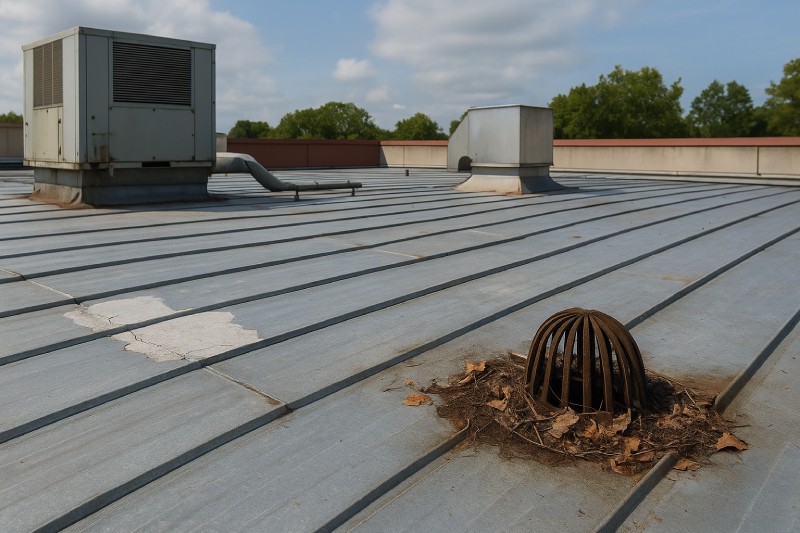
Fresno’s heat and UV accelerate roof surface defects. Single-ply membranes can chalk and shrink, coated systems can thin out, and metal panel roofs can loosen at end laps as panels expand and contract. When temperatures swing, seams and fasteners do the same. That movement widens any weak point.
Fall storms bring wind-driven rain that tests perimeter areas, copings, and roof drains. If strainers are missing or bowls are packed with leaves, water rises above flashings and finds water entry points. Add rooftop equipment like HVAC or kitchen exhaust, and grease or oils can break down a roof covering condition that looked fine in summer.
Regular commercial roof inspections give you a snapshot of actual risk, not guesswork. We document defects, rank them by urgency, and show you where a small repair today prevents bigger property damage later. A simple program beats surprise shutdowns every time.
What Commercial Roof Inspections Actually Cover
A complete inspection looks at compliance, condition, and warranty exposure. Compliance checks confirm safe access, fall protection, and the right paths to equipment. Condition checks measure how the roof membrane, flashings, and terminations are holding up. Warranty exposure asks whether any unapproved patches, incompatible sealants, or penetrations from other trades put coverage at risk.
Timing matters. We recommend semi-annual inspections for most commercial low-slope roofs, plus extra checks after major wind, hail, or heavy rain.
If vendors worked on the roof recently, book a quick follow-up to confirm their penetrations are sealed and documented. Inspector credentials also matter.
We are licensed, bonded, and insured, and our team is experienced with single-ply, modified bitumen, built-up, coated systems, and metal roofs.
When needed, we coordinate manufacturer letters and infrared scans for moisture verification.
The Fresno Compliance Snapshot
Fresno uses California codes, which means energy and reroof triggers can apply when work goes beyond simple repairs. Cool roof and insulation rules may kick in on reroof projects for nonresidential buildings, and permit thresholds hinge on how extensive the work is. Keep your paperwork handy, especially if you plan major maintenance or replacement.
Safety is another piece of the puzzle. If employees or vendors step onto your roof, fall protection plans, guarded skylights, and safe access are non-negotiable. We review tie-off points, hatch controls, ladder setup, and skylight guarding so every visit is controlled and documented.
Finally, we look at stormwater housekeeping. Clean roofs drain better. Clean drains and scuppers reduce overflow risk. For some industrial sites, rooftop housekeeping connects to broader facility plans, which is why photos and logs matter.
Codes and Standards That Drive Roof Inspections
California Building Code and California Energy Code influence reroof decisions and documentation. On nonresidential low-slope roofs, cool roof performance can be required when reroofing, along with insulation and related forms. We help you understand when those requirements apply and prepare the right submittals when your project needs a permit.
Safety standards shape access. Cal and federal rules require guarding for skylights or equivalent protection. Walking-working surfaces rules require a plan for exposed edges, openings, and routine service paths. We help owners close those gaps before an accident, not after.
Manufacturer standards also guide repairs. Using the wrong adhesive or masticant may void warranties. Our inspection checklist flags details that should be corrected with brand-compatible materials and methods.
For a deeper overview of energy triggers during reroof projects, see the California Energy Code Title 24 cool roof standards on the state’s site: California Energy Commission Title 24, Part 6.
Frequency Rules of Thumb: How Often, and After What
Most commercial roofs benefit from semi-annual inspections. We suggest one visit before the first fall rains and one after winter wet weather. The first visit clears debris, confirms roof drains and overflows are open, and tightens up small issues. The second visit checks for ponding evidence, seam movement, and any storm damage.
Event-based inspections protect your investment. If a major wind event hits, if hail is reported, or if seismic activity was felt, schedule a quick roof survey. Small punctures and lifted edges do not announce themselves until the next storm. Catch them early.
Equipment changes on the roof are another trigger. If HVAC crews, solar installers, or IT vendors add or move equipment, we should inspect penetrations, curbs, and supports. That coordination prevents unsealed holes and preserves warranties.
A Fresno-Ready Inspection Checklist

A reliable inspection checklist keeps everyone on the same page. We start by confirming safe access, anchor points, and skylight guarding. If access is unsafe, the inspection stops until controls are in place. Safety first, always.
We move to the field of the roof and inspect the membrane or roof covering. That includes seams, laps, punctures, blisters, shrinkage, oxidation on metal, and coating wear. We check penetrations and flashings at pipes, pitch pans, HVAC curbs, and sleepers. Perimeter areas get a close look at coping, edge metal, and terminations where wind can do the most damage.
Drainage is the lifeblood of a flat roof. We clear debris from roof drains, verify clamping rings and strainers, and confirm overflows and scuppers are open. We also look for deflection, soft spots, or fastener back-out that signals an issue with supporting structures. Every finding is logged with photos and locations mapped to a roof plan.
Roof-Type Specifics: What to Look For by System
Not every roof behaves the same. Single-ply systems like TPO and PVC need close attention at seam welds, T-joints, and transitions. UV exposure can lead to surface chalking and embrittlement at stress points. We watch for open laps and probe suspect welds.
Built-up and modified bitumen roofs tell their own story. We look for alligatoring, blistering, granule loss, and fishmouths at laps. These symptoms point to aging or trapped moisture. Coated roofs require spot checks for coating thickness, adhesion at metal edges, and cracks at transitions.
Metal roofs move as temperatures change. We check for fastener back-out, loose end laps, oxidation, and compromised sealant at penetrations. Where snow events are rare but possible, we watch for ice dams at gutters after cold snaps. Our reports include specific repair methods that respect the system’s design.
Safety and Access Before Anyone Steps on the Roof
Every safe visit starts on the ground. We verify ladders meet the angle and tie-off expectations, that roof hatches have self-closing features where required, and that skylights are guarded or covered. Warning lines or tie-offs are used in low-slope zones near unprotected edges.
Skylights are a hidden hazard. They look solid. They are not designed to hold a person without proper guarding or compliant covers. We inventory each skylight and document how it is protected, then we make corrections part of the action plan.
When multiple employers or vendors share a roof, coordination matters. We set rules for sign-in, access escorts, and cleanup. That prevents damage from other trades and keeps your records complete if you ever face a safety audit.
Energy and Cool Roof Checks That Show Up During Reroof

Reroof projects can trigger cool roof requirements and insulation upgrades on nonresidential low-slope buildings. That means minimum solar reflectance and thermal emittance values, or an SRI path if applicable. We collect data sheets and keep them with your project file so you can prove compliance later.
Aged performance is part of cool roof documentation in California. We confirm testing values and ensure product selection aligns with the code path your project is using. If you are considering a coating system, we can confirm whether it counts and how the paperwork should be prepared.
We also update your maintenance plan. Reflective roofs still need cleaning around roof drains and at dirt-prone areas. Keeping the surface clean helps preserve the energy benefit and extends service life.
Stormwater Housekeeping That Prevents Overflows
It is simple, and it works. Keep the roof clean. Leaves, branches, and packaging collect around drains and scuppers. Debris blocks flow, water rises, and overflows push water past flashings. We remove debris, reseat strainers, and verify that primary and secondary drains are clear.
Restaurants and food service facilities have another risk. Grease and oils degrade some roof membranes. We check containment systems and add protection where needed. If grease mats or trays get knocked out of place, we reset them and log the change.
Photos tell the story. Our inspection reports include before and after photos of each drain bowl, scupper, and overflow so your building preventive maintenance team can track improvement and plan repeat service at the right intervals.
Documentation That Stands Up to Audits and Claims
Good notes protect you. We produce a clean packet that lists the date, time, weather, and crew, then includes a roof plan with numbered findings, a photo appendix, and a prioritized action list. Each item is ranked by risk and code or warranty impact.
Cost clarity saves time. Quick fixes are priced with materials and labor. Larger items are scoped with options so you can choose the right timing and budget. If a permit is required for a reroof path, we flag it and prepare the submittal checklist.
Most insurance carriers want proof of maintenance. We store your logs, photos, and invoices so you can show a regular roof inspection program if a claim ever needs support.
Common Compliance Mistakes Fresno Owners Make
- Skipping the late-summer inspection before the first rains hit.
- Allowing vendors to access the roof without escort or documentation.
- Leaving drain bowls without strainers after cleaning.
- Letting PV or HVAC installers penetrate the roof without roof-tech oversight.
- Misplacing cool roof product data and forms during reroof projects.
- Using unapproved patch materials that void warranties.
- Ignoring loose coping and edge metal at perimeter areas.
- Forgetting to log inspections and repairs for insurance.
- Overlooking skylight covers or guard rails near work paths.
When an Inspection Triggers a Permit in Fresno
A quick repair does not always require a permit. Reroof work that replaces large areas or changes insulation and roof covering does. We examine the scope and advise whether your project will need submittals for review.
During reroof planning, we assemble product data, cool roof forms where applicable, and a clear scope sheet. That makes the permit process smoother and reduces back-and-forth with plan review.
We also forecast timing and fees. Our goal is a clean first review. If comments come back, we handle the response and keep your project moving.
Budgeting: What Commercial Roof Inspections Cost Locally
Inspection pricing depends on roof size, access, complexity, and reporting depth. A small single building costs less than a multi-roof campus with varied elevations and lots of equipment. Infrared scans, drone capture, or manufacturer letters are adders that can be worth it for risk-heavy sites.
A planned cadence wins on cost. Semi-annual inspections paired with quick repairs usually lower lifecycle spend. The budget surprise is almost always the leak that goes undetected until it has soaked insulation or damaged interior finishes.
We keep costs predictable. Our programs include scheduled visits, photo logs, and a maintenance calendar. You always know what is coming next.
Technology That Speeds Fresno Roof Inspections
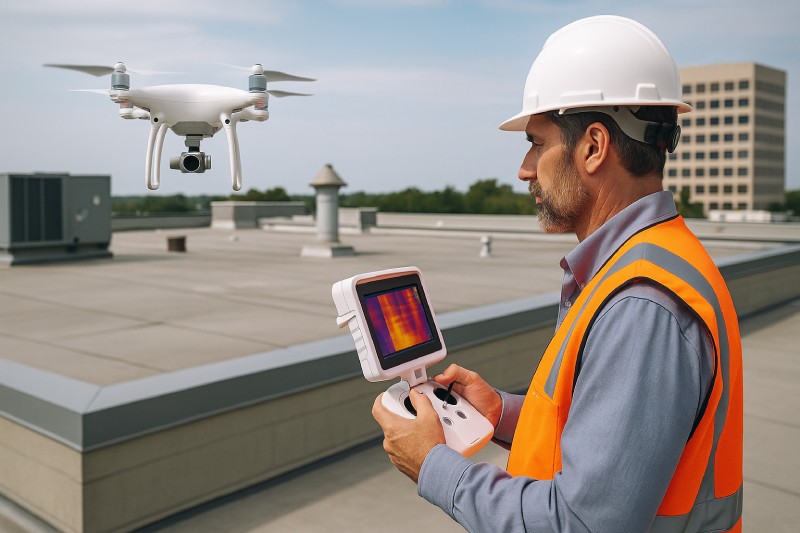
Drones help us see edges, courtyards, and tall parapets quickly when airspace and site rules allow it. Thermal imaging drones can spot temperature differences that suggest trapped moisture. When conditions are right, an infrared moisture scan provides a helpful map.
Handheld infrared cameras work too. We use them at penetrations and suspicious seams to find water ingress paths. Infrared technology is not magic. It is a tool that confirms where to open up or where to monitor closely.
Photo logs and plan overlays turn a technical report into something facility staff can act on. We include close-ups, wide shots, and locations on a keyed plan so your team can match each fix to a real place on the roof.
Choosing a Local Inspector or Roofing Partner
Start with license, bonding, and insurance. Ask for manufacturer authorizations on your system type. If you have TPO or PVC, make sure the contractor knows that membrane’s details. If you have metal, confirm experience with end laps, movement joints, and oxidation treatment.
Request a sample report. A good report reads like a roadmap, not a riddle. You should see prioritized items, photos, and clear scopes that your maintenance team can follow.
Check safety and references. Ask about fall protection plans, skylight guarding procedures, and local references in retail, medical, industrial, or education. Fresno is a small world. A proven track record matters.
7 Fast Repairs That Prevent Big Headaches
- Reseat the popped drain strainers and clear the bowls.
- Reattach loose edge metal with the right fastener and spacing where allowed.
- Reseal pitch pans and pipe boots that are starting to crack.
- Rebond small membrane voids at T-joints before they grow.
- Replace oxidized fasteners on metal roofs and add seal washers if required.
- Patch coating holidays and hairline cracks at transitions.
- Tighten supports at sleepers so the equipment does not abrade the membrane.
Each of these tasks is small. Combined, they add years to the roof and keep warranties intact.
Fresno-Ready Inspection Template: What We Deliver
We keep it simple for decision makers. You get a one-page executive summary that lists urgent, short-term, and long-term actions. The main report includes an annotated roof plan, a numbered findings list, and a photo appendix.
We price each recommended repair. You will see material types, quantities, and expected time on site. If a permit is needed, that is flagged with the forms we will prepare.
We also build a maintenance calendar for the next 12 to 24 months. You will know when to schedule semi-annual inspections, when to clean drains, and when to plan for a larger project.
Table: Recommended Inspection Cadence and Adders
| Roof System | Base Cadence | Adders to Consider | Common Risk Points |
| TPO or PVC single-ply | Semi-annual plus post-storm | Infrared moisture scan once per year for aging roofs | T-joints, pipe boots, field seams |
| Modified bitumen or BUR | Semi-annual plus pre-reroof survey | Core cuts where trapped moisture is suspected | Blisters, fishmouths, surfacing loss |
| Coated systems | Semi-annual with thickness spot checks | Adhesion checks at transitions | Cracks at metal edges, coating holidays |
| Metal panel roofs | Semi-annual with fastener checks | End-lap reseal program every few years | Oxidation, fastener back-out, sealants |
| Shingle or tile on light commercial | Annual plus post-storm | Underlayment spot checks near valleys | Valleys, step flashings, under-ventilation |
FAQs About Commercial Roof Inspections
How often should commercial roof inspections be done in Fresno?
We recommend semi-annual inspections for most low-slope commercial roofs, plus checks after major storms.
Fresno heat and UV punish seams, and the first rains of the season reveal any weak spots.
A pre-storm and post-wet season cadence keeps small defects from turning into leaks.
What does a commercial roof inspection include?
We review safe access and fall protection, then document the roof membrane, flashings, penetrations, perimeter terminations, drains, scuppers, and overflows.
We note biological growth, like the growth of algae, where ponding occurs, check for water stains inside, and map water entry points with photos on a keyed plan. If needed, we add infrared scans to verify moisture.
Do inspections help with insurance claims?
Yes. Carriers want proof of maintenance. A documented roof inspection program with photos, logs, and repair invoices shows you took reasonable steps to prevent damage.
That record often speeds up the insurance claim process and supports the scope of repairs.
When do cool roof rules apply during reroof projects?
On nonresidential low-slope buildings, reroof projects can trigger cool roof and insulation requirements.
We confirm if your scope meets the thresholds and assemble the product data and forms so you are ready for review.
Can you coordinate with my HVAC or solar vendor?
Absolutely. We escort third-party crews, oversee penetrations, and patch with system-approved materials. That protects warranties and prevents future leaks created during equipment work.
Call Us: Fresno Roof Repair’s Compliance-First Process
A safe, code-aware roof plan will save you time and money this year. Here is how we work it. We start with a quick scoping call and any building plans or past reports you have.
On-site, we set safe access, inspect, and document everything with photos.
You receive a same-week report with a prioritized action list and priced repairs. If your project crosses into reroofing territory, we handle permits and cool-roof paperwork.
Ready to build a simple plan that works?
Book your Roof Inspection with Fresno Roof Repair and keep your operation leak-free, audit-ready, and covered.

Alexander Johnson is an experienced roofing professional with more than 25 years in the industry and serves as CEO of Fresno Roof Repair. His expertise combines traditional craftsmanship with modern technology, with a focus on durable roofing solutions designed for Fresno’s diverse climate.